
Respectful Relationships
What is Respectful Relationships?
Respectful Relationships education is a core component of the Victorian Curriculum from Foundation to Year 12. It is being taught in all Government and Catholic schools and many Independent schools. It is all about embedding a culture of respect and equality across the entire school and the local community that aligns with our school values. The term Respectful Relationships, (also known as RR) refers to relationships that demonstrate non violence, equality, mutual respect and trust, to create a future free from violence. We all want our children to have an education that provides them with opportunities to build healthy relationships, resilience and confidence. Respectful Relationships embeds this culture of respect and equality across our entire school community, from our classrooms to staff rooms, sporting fields and social events.
In the Classroom
Respectful Relationships acknowledges that all children, regardless of their age, have challenges to overcome. The teaching program aims to develop social and emotional skills appropriate to their age and maturity level. In the primary years, Respectful Relationships focuses on treating everyone with respect and dignity. Weekly sessions are delivered by your child’s classroom teacher. The lessons align to the Victorian Curriculum and include activities that help students learn and practise social skills and apply them in a positive way to learning, life and relationships.
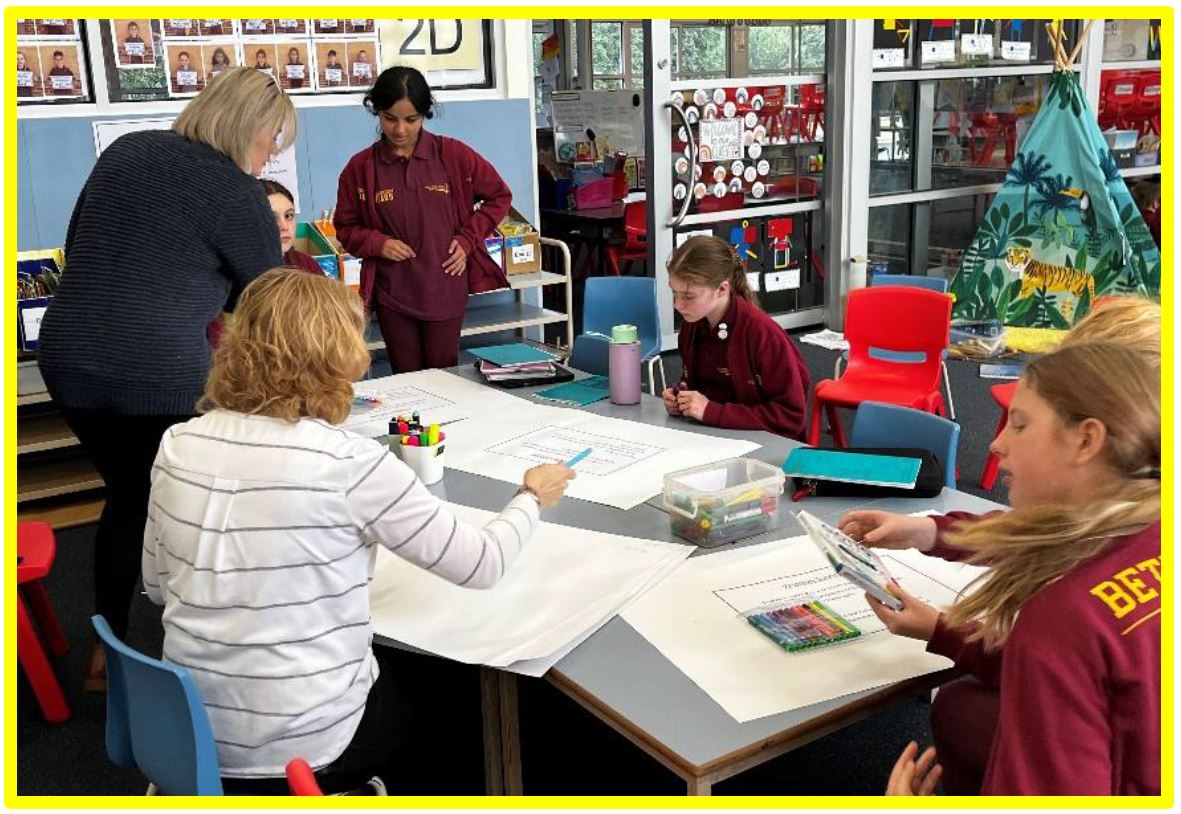
At MPHPS, we prioritise the wellbeing of every student, fostering a safe, inclusive, and supportive environment where children can thrive academically, socially, and emotionally.
The Respectful Relationships classroom program focuses on the following key topics:
- Topic 1: Emotional Literacy
- Topic 2: Personal and Cultural Strengths
- Topic 3: Positive Coping
- Topic 4: Problem Solving
- Topic 5: Stress Management
- Topic 6: Help Seeking
Talking about how we feel helps us to understand ourselves and other people better.
We learn how to:
- understand our emotions
- express how we feel
- see things from someone else’s perspective to understand how they feel
- respond appropriately to someone else’s emotion.
What are my strengths and positive qualities?
Focusing on our strengths helps us to improve our wellbeing, behaviour and academic achievement.
We need to be able to talk about our strengths and positive qualities in order to understand them.
We learn how to:
- talk about strengths and positive qualities
- recognise our own strengths and positive qualities
- recognise other peoples’ strengths and positive qualities
- focus on strengths when discussing personal, social and ethical challenges.
What do we do when life gets challenging?
Some behaviours help us deal with challenges successfully. Other behaviours are not helpful.
Talking about different ways of coping helps us to understand good strategies and unhelpful strategies.
When we learn about different ways of coping, we get better at choosing successful coping strategies.
We learn how to:
- use different types of coping strategies
- reflect on our own choices
- practise positive self talk – a key strategy to cope with negative thoughts, emotions and events.
Problem solving is a positive coping strategy: being able to solve problems helps us to cope with challenges.
We learn how to:
- think critically and creatively to solve problems
- explore personal dilemmas as well as social and ethical issues.
All kinds of things can make us feel stressed.
If we learn how to manage the stress, we can deal with challenges more easily.
We learn how to:
- recognise when we are stressed
- work out strategies to deal with stress effectively
- calm ourselves in stressful situations.
Some problems are too big to solve alone.
It’s ok to ask for help.
We learn how to:
- recognise when to seek help
- recognise who we can trust to ask for help
- practise seeking help from peers and adults.
Topic 1: Emotional Literacy
Topic 2: Personal and Cultural Strengths
Topic 3: Positive Coping
Topic 4: Problem Solving
Topic 5: Stress Management
Topic 6: Help Seeking